Money & Growth · Mechanism
The 11pm Bank-App Spiral: Why Night Checks Feel Worse
88% of Americans feel money stress entering 2026 (NEFE). Here's why 11pm balance checks feed the worry loop, and the 2-minute fix that moves it to morning.
 by Alex July 12, 2026 Updated August 4, 2026 11 min read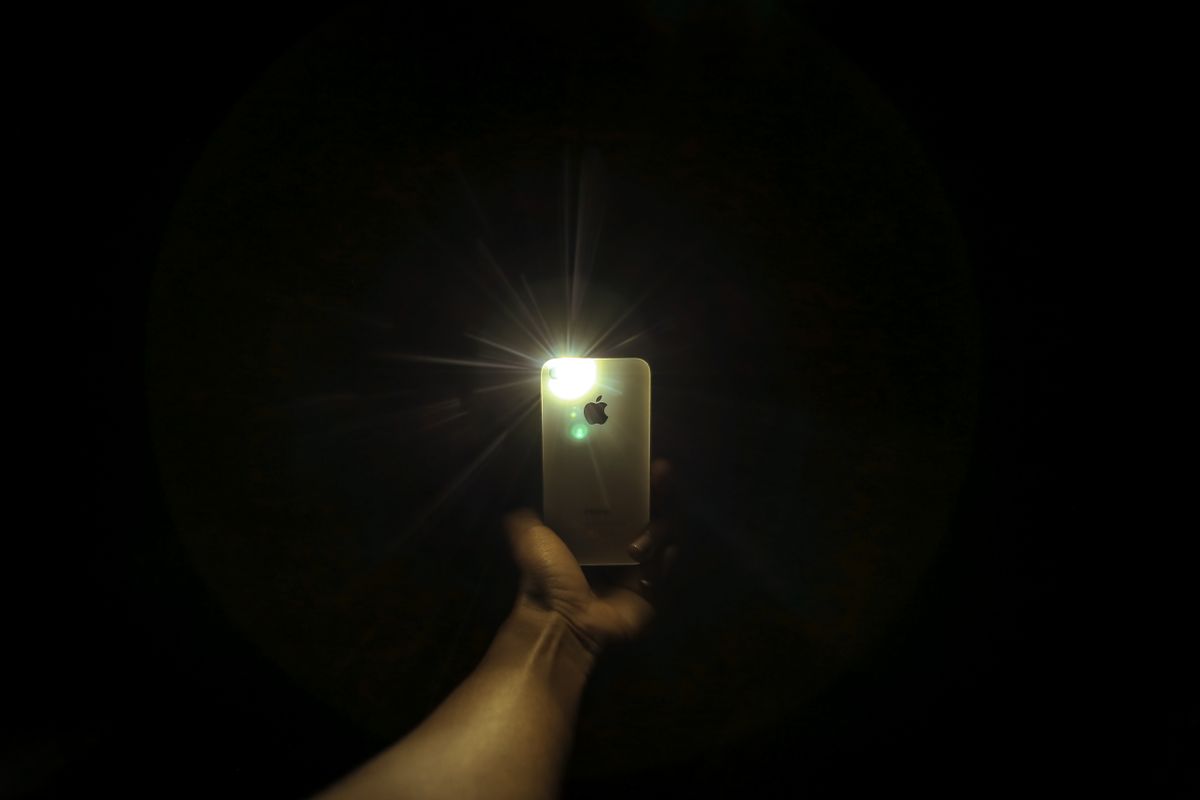
It’s 11pm. Lights off, day done, and your thumb is already on the banking app. One quick look turns into mental math: rent, the card, that subscription you forgot to cancel. Twenty minutes later you know nothing new, and you feel worse.
That puts you in a very large club. 88% of Americans said they felt stressed about money heading into 2026 (NEFE, 2026). The late-night balance check is that stress’s favorite ritual. It runs on the same loop as doomscrolling: a mood problem dressed up as an information problem. Spending does the same costume trick, and the part that lifts the mood turns out not to be the buying.
This guide names the mechanisms behind the spiral. Then it moves the whole ritual to a time of day your brain can actually use it.
A quick note: this is education, not therapy or financial advice. If money worry is running your whole day, a nonprofit credit counselor or a therapist is a solid next step, not a defeat.
The Bottom Line
- The 11pm balance check is a worry loop, not money management.
- After midnight, your brain tilts negative while impulse control runs low (Tubbs et al., 2022).
- Financial hardship means double the odds of insomnia symptoms, OR 2.11 (Chessa et al., 2025).
- The fix: a scheduled worry slot, a morning check, and one folder of friction.
In this guide:
- What is the 11pm bank-app spiral?
- Why does midnight make money feel worse?
- What does the checking loop cost your sleep?
- The ostrich effect: you check most when you need it least
- Does checking your balance more give you more control?
- What actually breaks the spiral?
- FAQ
What is the 11pm bank-app spiral?
The spiral is checking your balance to manage a feeling, not to make a decision. Psychologists call the engine rumination: replaying a problem on a loop without moving toward a fix. A 2008 review of decades of thinking-loop research found rumination keeps bad moods alive longer and makes problem-solving worse, not better (Nolen-Hoeksema et al., 2008).
Here’s the loop in slow motion. A money thought surfaces in the quiet. You open the app to settle it. But the number can’t answer the real question, which is “will I be okay?” So your brain starts auditing. At 11pm you can’t call the bank, move a paycheck, or cancel anything that matters. No action, no closure. The worry stays open, so ten minutes later you check again.
Notice what that is: a feed. The bank app is a one-post feed where the post is your balance, and the outcome varies just enough to hook you. A pending charge clears. A payment lands. Variable outcomes are the same hook that powers dopamine-driven scrolling. Doomscrolling and balance-checking aren’t cousins. They’re twins.
Why does midnight make money feel worse?
Because after midnight, you’re reading your finances with different hardware. A 2022 paper in Frontiers in Network Physiology pulled the evidence together under one name: “The Mind After Midnight” (Tubbs et al., 2022). Late-night wakefulness tilts attention toward negative information. Meanwhile prefrontal control, your planning and impulse brakes, idles at its daily low.
Same number, different brain. The $214 that reads as “tight but fine” at 9am reads as “everything is collapsing” at midnight. That’s not drama. That’s your body clock doing exactly what it does every night.
Straight talk: “The Mind After Midnight” is a hypothesis paper. It synthesizes sleep and circadian evidence into a framework, not a single decisive trial. The sleep numbers below, though, come from direct studies of thousands of adults.
And the check doesn’t end when you lock the phone. In 2006, researchers named the perseverative cognition hypothesis: worry and rumination keep the body’s stress systems switched on long after the stressor is gone (Brosschot et al., 2006). Heart rate, stress hormones, the whole dashboard. Your body keeps running the tab while you’re trying to drift off.
What does the checking loop cost your sleep?
Money strain and bad sleep travel together, and the numbers are blunt. A 2025 Sleep Health study surveyed 4,388 adults (Chessa et al., 2025). Financial hardship meant 2.11 times the odds of insomnia symptoms. It also meant 1.69 times the odds of poor sleep quality, and 1.40 times the odds of short sleep.
Correlation, sure. But a nine-month 2025 study in the Journal of Business and Psychology traced the pathway (Brossoit et al., 2025). Money stress predicted stress-driven bedtime behaviors, late-night checking and scrolling among them. Those behaviors then predicted worse sleep. And worse sleep makes the next day’s money thinking foggier, which feeds the next 11pm session. Money worry quietly runs up a scarcity tax on your attention, and the late-night loop is where the bill comes due.
That’s the real cost of the spiral. Not the twenty minutes of checking. The loop those minutes set spinning.
The ostrich effect: you check most when you need it least
Here’s the twist that gives the game away: the checking habit isn’t really about information. In a 2017 working paper, economists Olafsson and Pagel analyzed real bank-login records (Olafsson & Pagel, 2017). People checked their accounts more when balances were high, and went quiet when they slipped into the red. They called it the ostrich effect.
Read that again. If checking were monitoring, it would increase when things got risky. It does the opposite. Checking rises when good news is likely, and falls when the news might hurt.
So the 11pm login is reassurance-seeking. You’re not asking the app “what’s my balance?” You’re asking it “tell me it’s fine.” And reassurance-seeking has the same flaw as every worry loop: the relief shrinks each round while the urge grows.
I used to run a full lap after midnight: bank, credit card, bank again, as if the number might blink. It never blinked. The lap wasn’t finance. It was a lullaby that didn’t work.
A balance check at 11pm isn’t accounting. It’s asking a number for a hug.
Does checking your balance more give you more control?
No, and the lab evidence points the other way. In a 2003 experiment, people who checked something repeatedly grew less sure of what they’d seen. Their memory confidence dropped while their actual accuracy stayed the same (van den Hout & Kindt, 2003). Checking didn’t add certainty. It manufactured doubt.
That result has held up for twenty years. A 2023 meta-analysis pooled the checking experiments and found a large effect of repeated checking on memory distrust, g = 0.870 (Abbasi Jondani et al., 2023). In plain words: the more you re-verify, the fuzzier the memory feels. And fuzz feels like a reason to check again.
That’s why the third look never settles it. Each check withdraws a little confidence from the account it claims to fill. “More checking means more control” is the money myth midnight loves most, and it runs exactly backwards.
What actually breaks the spiral?
Not willpower at 11pm. Better scheduling before 11pm. The strongest general tool here is the implementation intention, an “after X, I do Y” plan. A 2006 meta-analysis of 94 studies found these plans improve follow-through with a medium-to-large effect, d = .65 (Gollwitzer & Sheeran, 2006). You’ll use one for the worry, and one for the money.
Give the worry an appointment
Worry postponement goes back to Borkovec’s stimulus-control experiments in 1983 (Borkovec et al., 1983). The move: pick a daily 15-minute worry slot, ideally afternoon. When money thoughts pop up at night, jot a two-word note and defer them to the slot. A 2023 meta-analysis found scheduled worry time measurably reduces worry (Dippel et al., 2023). You’re not suppressing the thought. You’re giving it office hours.
Move the check to morning
Then give the balance check a fixed daytime slot: “After my morning coffee, I open the bank app once.” That’s an implementation intention doing what it does best. Morning-you has working prefrontal brakes and real options: transfer, cancel, email, call. Same number, but now it can become an action instead of a loop. If the plan needs an anchor, stack it onto a habit you already have. It’s one more piece of the psychology behind your money habits.
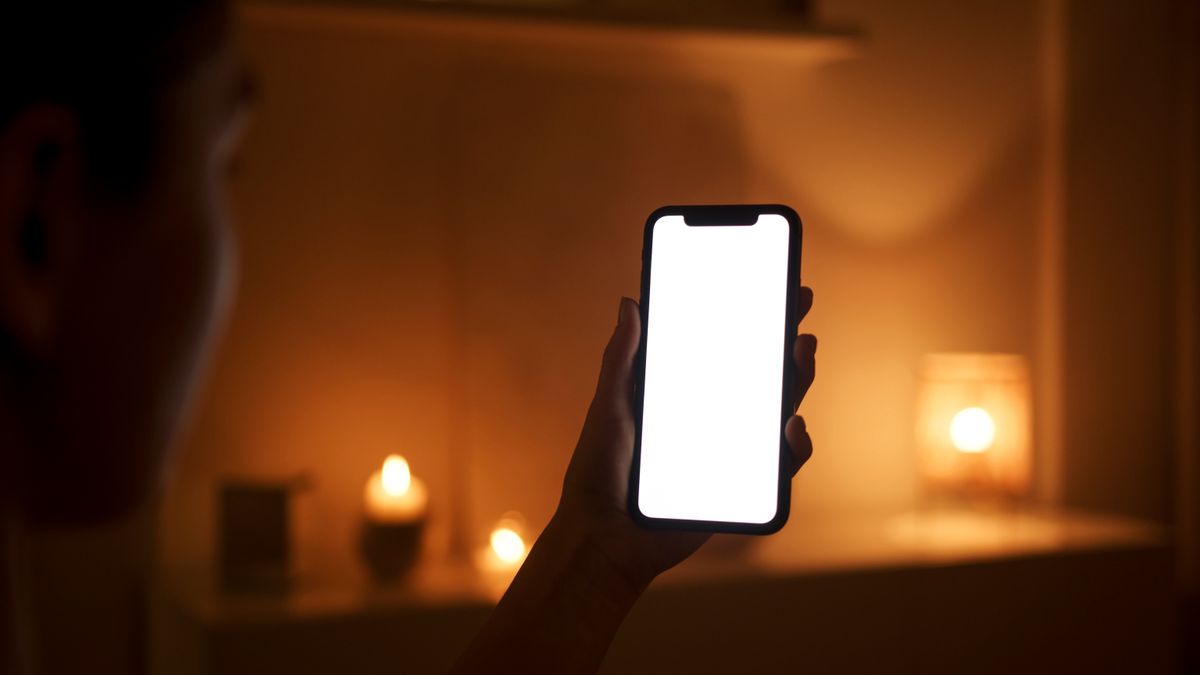
Put the app one folder deeper
Finally, borrow the friction playbook that already works on doomscrolling. Move the banking app off your home screen and into a folder. Log out at night so a check costs a password. Mute balance notifications after dinner. Friction doesn’t fight the urge. It just makes the morning slot the easiest path to the answer. If the urge is really about spending, not just checking, a 30-day no-spend challenge resets the habit at its source.
FAQ
Is it bad to check your bank account every day?
No. The frequency isn’t the problem; the job you’re hiring the check for is. One scheduled morning check is monitoring, and “after X, I do Y” plans carry a d = .65 effect on follow-through (Gollwitzer & Sheeran, 2006). Repeated night checks are reassurance-seeking, and repetition breeds doubt, not certainty.
Why does money always hit hardest at night?
Night is the first unguarded quiet of the day, so open problems surface. Then biology piles on. After midnight, attention tilts negative and impulse control idles (Tubbs et al., 2022), while worry keeps your stress physiology running into sleep (Brosschot et al., 2006).
Isn’t a worry slot just postponing the problem?
No, it’s the opposite of avoidance. You’re moving the thinking to the one time it can become action, and a 2023 meta-analysis found scheduled worry time reduces worry (Dippel et al., 2023). Avoidance never opens the app. The slot opens it once, on purpose, with your daytime brakes on.
What if I check in the morning and the number really is bad?
Then you’ve caught it at the one time you can act. Move money, freeze a card, call the provider, or book a free session with a nonprofit credit counselor. The 11pm version of you could do none of that. A bad number plus one action beats a bad number plus a bad night.
The Bottom Line
The 11pm balance check feels like responsibility, but it’s rumination with a login screen. Midnight hands you a brain tilted toward bad news. The check pays out doubt instead of certainty, and the whole session bills your sleep. The research points to one redesign. Park the worry in a daytime slot, chain the check to your morning coffee, and make the app slightly harder to reach at night. Same money, better hours.
If the checking is happening at midnight because you were awake anyway, the coffee has a longer reach than most people think: caffeine’s half-life puts an afternoon cup in your bloodstream at bedtime.
One small action today: write tomorrow’s money-check time on a sticky note (after coffee, not after midnight), and move your banking app one folder deeper on your phone. Two minutes, both done.
Alex is the voice of Self Lab: practical psychology for people who are done with motivational fluff.
Sources
- National Endowment for Financial Education (NEFE), poll: Americans feeling stressed to begin 2026, retrieved 2026-07-12, https://www.nefe.org/news/2026/01/poll-americans-feeling-stressed-to-begin-2026.aspx
- Perspectives on Psychological Science (SAGE), Nolen-Hoeksema, Wisco & Lyubomirsky, “Rethinking Rumination”, retrieved 2026-07-12, https://journals.sagepub.com/doi/10.1111/j.1745-6924.2008.00088.x
- Journal of Psychosomatic Research (via PubMed), Brosschot, Gerin & Thayer, the perseverative cognition hypothesis of prolonged stress activation, retrieved 2026-07-12, https://pubmed.ncbi.nlm.nih.gov/16439263/
- Frontiers in Network Physiology, Tubbs et al., “The Mind After Midnight” hypothesis of late-night wakefulness, retrieved 2026-07-12, https://www.frontiersin.org/journals/network-physiology/articles/10.3389/fnetp.2021.830338/full
- Sleep Health (via PubMed), 2025 study of financial hardship and sleep outcomes in 4,388 adults, retrieved 2026-07-12, https://pubmed.ncbi.nlm.nih.gov/39848817/
- Journal of Business and Psychology (Springer), 2025 nine-month study linking financial stress, bedtime stress behaviors, and sleep, retrieved 2026-07-12, https://link.springer.com/article/10.1007/s10869-025-10075-y
- NBER Working Paper 23945, Olafsson & Pagel, “The Ostrich in Us: Selective Attention to Financial Accounts, Income, Spending, and Liquidity”, retrieved 2026-07-12, https://www.nber.org/papers/w23945
- Behaviour Research and Therapy (via PubMed), van den Hout & Kindt, repeated checking and memory distrust, retrieved 2026-07-12, https://pubmed.ncbi.nlm.nih.gov/12600401/
- Journal of Behavior Therapy and Experimental Psychiatry (ScienceDirect), 2023 meta-analysis of repeated checking and memory distrust, retrieved 2026-07-12, https://www.sciencedirect.com/science/article/abs/pii/S0005791623000228
- International Journal of Cognitive Therapy (Springer), 2023 meta-analysis of worry postponement, retrieved 2026-07-12, https://link.springer.com/article/10.1007/s41811-023-00193-x
- Advances in Experimental Social Psychology (ScienceDirect), Gollwitzer & Sheeran, meta-analysis of implementation intentions across 94 studies, retrieved 2026-07-12, https://www.sciencedirect.com/science/article/abs/pii/S0065260106380021
- Behaviour Research and Therapy (via PubMed), Borkovec et al., stimulus-control treatment of worry, retrieved 2026-07-12, https://pubmed.ncbi.nlm.nih.gov/6615390/
A free gift
Open the gift. We're not saying what's inside.
It's free, it fits on two pages, and it might ruin a few pieces of self-help advice for you. Open it?
One step left
It's The Debunk Deck.
Eight famous self-improvement rules that failed the science, with the study that killed each one and a line you fill in to make it yours. Two printable pages, in your inbox in under a minute.
Confirm your email and it lands in your inbox. One short email a week after that. Unsubscribe anytime.