Attention & Dopamine · Mechanism
The Phone-on-Desk Study Didn't Replicate. Move It Anyway
A 2017 study said a phone on your desk drains your brain. The one direct replication found nothing. Here is what your phone actually costs you, and the fix.
 by Alex July 28, 2026 20 min read
In 2017, four researchers ran a pair of experiments that went everywhere. More than 800 undergraduates sat down to a working memory task, and in the first experiment a short reasoning test as well. Their phones were either on the desk, in a bag or pocket, or in another room entirely. Every phone was silenced. The students whose phones were in another room scored best (Ward, Duke, Gneezy & Bos, 2017).
The headline wrote itself. Your phone drains your brain just by lying there.
Then came the part nobody quotes. One lab set out to reproduce that result exactly, and got nothing.
So this guide gives you both halves: what the evidence actually supports, what it doesn’t, and why moving your phone is still worth five minutes of your life. Just not for the reason you’ve been told. If you already know systems beat willpower, you’ll recognize where this lands.
The short version
- The famous “brain drain” effect is contested. The single pre-registered direct replication of the original design found nothing (Ruiz Pardo & Minda, 2022), and a 2024 meta-analysis pooling 166 effect sizes across 4,368 people landed on essentially zero (Hartanto et al., 2024).
- What holds up better: a notification you never answer still raises your error rate (Stothart, Mitchum & Yehnert, 2015).
- The real cost isn’t a mysterious drain. It’s the checking, and the trip back.
- Distance beats discipline. People who score high on self-control mostly arrange their days to avoid temptation rather than out-muscling it (Ent, Baumeister & Tice, 2015).
- Your pocket doesn’t count as distance.
In this guide:
- What the brain drain study claims
- Did it replicate?
- What your phone actually costs you
- Why distance beats discipline
- Where the phone has to be
- The 5-minute desk setup
- FAQ
What does the brain drain study actually claim?
The claim is narrow, and much narrower than the internet version. Ward and colleagues argued that a visible phone quietly eats a slice of your working memory, because part of your attention stays busy not-thinking about it (Ward, Duke, Gneezy & Bos, 2017). Not distraction. Suppression.
The setup ran twice. In the first experiment, 548 students did a working memory span task and a ten-item pattern-reasoning test, with phones face down on the desk, in a bag or pocket, or in another room. The second experiment repeated the location manipulation with 296 more students, added a sustained attention task, and crossed everything with whether the phone was switched on or off. Desk phones were face up that time. Everything was silenced throughout, and nothing buzzed, lit up, or rang. The results lined up in a gradient: another room scored highest, desk lowest, and bag or pocket landed in between without being clearly better than the desk.
Two details made the study spread. First, powering the phone off didn’t rescue anyone. A dead black rectangle apparently cost about as much as a live one. Second, students insisted their phone had made no difference to them: 75.9% said its location had not affected their performance at all, while the scores said otherwise.
That combination is irresistible to write about. An invisible tax you can’t feel and can’t override. It got quoted in productivity books, TED talks, and roughly every focus article published since.
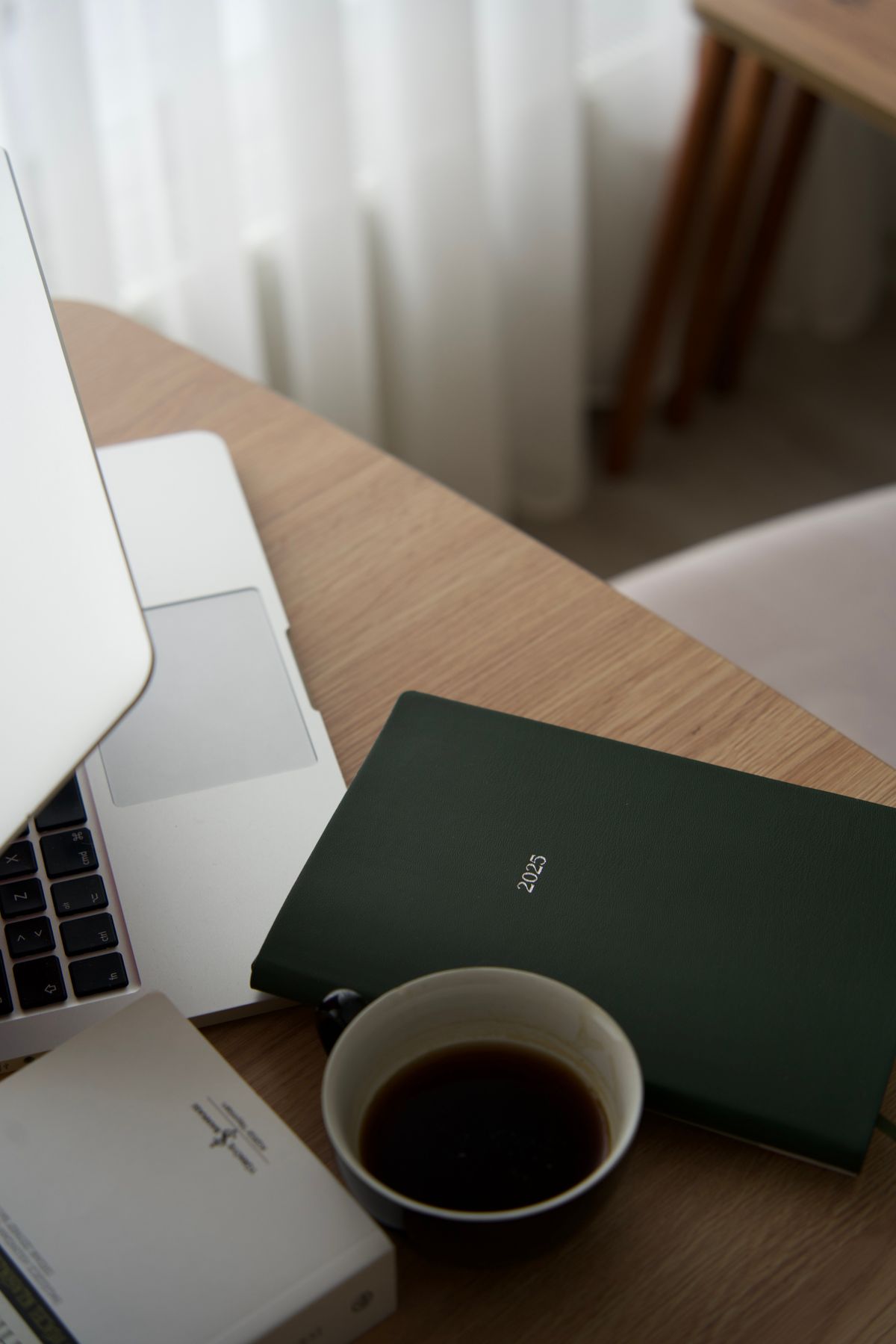
Two things worth holding onto before we go further. The gaps were tiny: partial eta squared between .014 and .026, which is the statistical neighborhood where findings routinely fail to show up again in other labs. And the sustained attention task in the second experiment produced nothing at all. Even in the paper that started this, phone presence did not touch attention. It touched memory scores.
Did the brain drain effect replicate?
Once, and it failed. That is the honest version of the story, and it is more interesting than either the viral version or the debunking version.
Exactly one team has published a direct replication. In 2022, researchers at Western University pre-registered a copy of Ward’s second experiment: same six conditions, same working memory task, same go/no-go task. The brain drain effect did not appear, on either measure (Ruiz Pardo & Minda, 2022).
Everything else in this literature tests something adjacent. A Swiss team put phones on desks and measured short-term and prospective memory instead, and found no overall cost, with one wrinkle: participants who scored low on smartphone dependency actually did better on the prospective memory task when the phone was absent (Hartmann, Martarelli, Reber & Rothen, 2020). A Dutch team tested a different construct entirely, whether a visible phone or an incoming notification damages your ability to stop an impulse. It didn’t, though people did report feeling more distracted (Johannes, Veling, Verwijmeren & Buijzen, 2019).
And the scoreboard isn’t a shutout. Some studies find something.
| Study | What it tested | What it found |
|---|---|---|
| Thornton et al. (2014) | A cell phone left in view during attention tasks (the experimenter's in Study 1, the students' own in Study 2) during attention tasks | Performance dropped on the harder tasks only |
| Ward et al. (2017) | Desk vs bag vs another room, memory and reasoning | Another room scored best; the original claim |
| Johannes et al. (2019) | Phone visibility and notifications on impulse control | No effect on behavior; more felt distraction |
| Hartmann et al. (2020) | Phone presence, short-term and prospective memory | No overall cognitive cost |
| Ruiz Pardo & Minda (2022) | Pre-registered direct replication of Ward et al. | The effect did not appear |
| Skowronek, Seifert & Lindberg (2023) | Mere presence during a basic attention test (n=42, run over videoconference) | Attention performance dropped |
| Hartanto et al. (2024) | Meta-analysis: 33 studies, 166 effects, 4,368 people | Pooled d = -0.02, not significant |
| Parry (2024) | Meta-analysis: 56 studies, 7,093 people | Only working memory capacity survived; everything else null |
| Böttger, Poschik & Zierer (2023) | Meta-analysis: 22 studies, 43 effects | Small memory effect (g = -0.23); attention null |
Here’s the pattern that matters, and it isn’t “the effect is fake.” It’s that the positive findings and the null findings are not answering the same question. The one study built to reproduce Ward’s exact design found nothing. And when three independent teams pooled the whole literature, the only thing that ever survived pooling was a small effect on memory measures. Attention never did. So the version of this claim that spread, the one where a phone on your desk fogs your thinking in general, is precisely the version with the least evidence behind it. A 2025 field study that put the question in real high school classrooms found nothing either (le Roux, Parry & Feldman, 2025).
Straight talk: the honest verdict is that we don’t know whether a silenced, face-down phone costs you anything, and the best current estimate is close to zero. Anyone selling you “science proves your phone lowers your IQ” is quoting one 2017 paper and skipping the nine years since. That’s not the standard we hold ourselves to here.
So has this whole article collapsed in its second section?
No. Because the phone on your desk is not silenced, is not face down, and is not sitting still. Which is where the evidence gets much sturdier.
So what is your phone on the desk actually costing you?
It costs you interruptions, and that evidence is far better supported than mere presence, though not unanimous either. In a 2015 experiment, people doing a sustained attention task made significantly more errors when their phone buzzed, even though they never picked it up and never looked at it. The authors note that the size of the disruption was comparable to what other studies find when people actually use the phone (Stothart, Mitchum & Yehnert, 2015).
You didn’t touch it. You still paid.
The follow-on evidence points the same way. When 221 students spent one week maximizing interruptions, alerts on and phone within reach, and another week minimizing them, alerts off and phone stowed away, the interrupted week produced higher self-reported inattention and hyperactivity symptoms (Kushlev, Proulx & Dunn, 2016). Note that alerts and phone placement moved together in that design, so it can’t tell you which half did the work. It tells you the package costs something.
Now add volume. A 2023 study that logged real devices found young people received a median of 237 notifications a day, with about a quarter arriving during school hours and 5% at night (Common Sense Media, 2023). That sample was 11 to 17 year olds. Nobody has published a comparable device-logged figure for working adults, so I’m not going to invent one for you.

Then there’s the return trip. Gloria Mark’s team shadowed office workers and found that when people resumed an interrupted task the same day, it took an average of 25 minutes and 26 seconds, with roughly two other tasks visited in between (Mark, González & Harris, 2005). You will see this quoted everywhere as “23 minutes and 15 seconds.” That number is not in the paper. It comes from press interviews, and the spread is enormous anyway, with a standard deviation larger than the mean. Treat it as a field observation about direction, not a stopwatch reading. Getting interrupted is cheap. Getting back isn’t.
Mark’s later work tracked something more unsettling. Average time on any one screen before switching fell from about 2.5 minutes in 2004 to roughly 47 seconds in recent years (Mark, via APA).
Something got lost while everyone argued about the brain drain. Nine years of debate went into a silenced phone lying face down, a situation that exists almost exclusively inside psychology labs. Your actual phone lights up and buzzes. The lab question is genuinely unsettled. The real-world one isn’t.
Why does distance beat discipline?
Because resisting the same temptation all day is a losing structure, whatever your character is like. In a study that pinged 205 adults throughout their week, desires for media use came fourth in raw frequency, behind eating, sleeping and drinking (Hofmann, Baumeister, Förster & Vohs, 2012). More telling is what happened when people tried to resist those particular desires. Media use produced the highest rate of self-control failure of any category the researchers tracked: 42% of media desires got acted on anyway, despite an active attempt to resist (Hofmann, Vohs & Baumeister, 2012). Wanting to check is normal. Winning that specific fight is what people are bad at.
Now the finding that reframes the whole problem. People who score high on trait self-control don’t win more fights with temptation. They have fewer fights, because they choose settings and routines that keep the temptation out of range in the first place (Ent, Baumeister & Tice, 2015).
Six studies covering 2,274 people found the same shape from a different angle: the benefits of self-control ran through beneficial habits, not through effortful resistance in the moment (Galla & Duckworth, 2015).
The disciplined person isn’t winning the fight. They set the room up so the fight never starts.
This is why “just have more willpower with your phone” fails so reliably. It asks you to win the same decision dozens of times a day, every day, forever. One loss is all it takes, and there is no version of you that goes undefeated.
I tested this on myself for a month, badly at first. Week one I kept the phone face down beside the laptop and promised to be strong about it. I flipped it over maybe fifteen times a day. Week two I moved it to a shelf in the hallway, out of sight and out of reach, and the urge still came on schedule. It just arrived, found nothing to grab, and dissolved before I’d stood up. The willpower version cost me effort all day. The shelf version cost me one decision, made once, at 9am.
Why the reach happens at all is less settled than most articles admit. There is no phone-specific study I trust here. The best available guess borrows from procrastination research, where reaching for a distraction tracks a wobble in mood rather than genuine curiosity, and that loop is well documented for putting things off. Extending it to phone checking is an inference, not a finding, so hold it loosely. What you can observe directly is the timing: the reach tends to land right when the work turns slightly unpleasant.
Where does the phone actually have to be?
Far enough that reaching for it is a decision, not a reflex. In the original study, the gradient only really opened up when the phone was in a different room. A phone in a pocket or a bag under the chair landed in between, and wasn’t clearly better than one on the desk (Ward, Duke, Gneezy & Bos, 2017).
Since that specific effect is shaky, don’t treat “another room” as a proven dose. Treat it as the cheapest available experiment. It costs nothing, it can’t hurt you, and the interruption evidence sitting behind it is much stronger than the mere-presence evidence in front of it.
The useful test is behavioral. Can you get the phone into your hand without standing up? If yes, it’s too close.
| Where the phone is | What it takes to check it | Verdict |
|---|---|---|
| Face down on the desk | A flip of the wrist | Reflex, not a decision |
| Screen down in a drawer | Open a drawer | Better, still one motion away |
| Pocket or bag at your feet | A reach | Roughly desk-level in the original study |
| Bag across the room | Stand up and walk | This is where it starts working |
| Another room, on a shelf | Stand up, leave, come back | The strongest version |
A caveat about Do Not Disturb. It kills the buzz, which is the part with the best evidence behind it, so it is genuinely worth doing. What it can’t do is stop you from checking on your own initiative, and those checks are the overwhelming majority: when researchers recorded 1,130 real phone interactions with first-person video, 89% were started by the user rather than triggered by a notification (Heitmayer & Lahlou, 2021). Silencing solves the interruption. Distance solves the reflex.

And no, you don’t have to do this all day. Nobody’s asking you to renounce a device you need for work, family, and the bus timetable. One or two protected blocks is the whole ask.
Save this for your next focus block. Pin the placement table to your productivity board so it’s there when your phone starts creeping back toward the keyboard.
The 5-minute desk setup
Set this up once and it runs without you. That’s the entire point, because a system you build on a calm Sunday still works on an exhausted Thursday. Five minutes, four steps.
Step 1: Pick the phone’s parking spot
Choose one fixed place that is out of the room, or at least across it. A hallway shelf. A kitchen counter. A specific drawer in a room you are not currently in. The only real requirement is that it never changes, because a fixed location eventually stops requiring a decision at all, while “somewhere over there” demands a fresh one every single time and quietly gives you an excuse to keep the phone close on the days you least want to give it up.
Step 2: Attach it to something you already do
Don’t rely on remembering. Attach the move to a cue that already fires: after I sit down with my coffee, I take the phone to the shelf. That’s habit stacking, and it works because the cue does the remembering for you.
Step 3: Cut the buzz for everything that isn’t a human
Turn off notifications for every app that isn’t a person contacting you directly. Keep calls and texts from your actual contacts, kill the rest, and don’t negotiate with an app that describes itself as urgent. The 2015 error data was about alerts people never even answered, so this one has real evidence under it rather than just tidiness.
Step 4: Set an end time before you start
Give the block a finish line: 45 minutes, or until the timer goes. Any sane number works, and 25 is not a scientific one despite what the timer apps imply.
Knowing when you get the phone back removes most of the itch. If 45 minutes feels impossible today, run the 2-minute version instead. Phone on the shelf, work for two minutes, then decide.

Start with one block a day. Not your whole calendar. One.
FAQ
Does a phone on your desk really lower your IQ?
No. That claim is a misreading of one 2017 study. It did include a short set of Raven’s matrices, which is a fluid-intelligence measure, but what it captured was momentary performance in a lab session, not a stable trait, and the gaps were tiny (Ward, Duke, Gneezy & Bos, 2017). The one pre-registered direct replication found no effect at all (Ruiz Pardo & Minda, 2022), and pooled across the whole literature the average effect is close to zero (Hartanto et al., 2024). Treat the viral version as folklore.
Is face down good enough?
Probably not, though for a plainer reason than you’ve read. Face down still sits inside arm’s reach, so checking stays a reflex rather than a decision. The evidence that a silenced, face-down phone costs you anything by itself is weak. The evidence that you’ll flip it over anyway is your own last week.
Does Do Not Disturb solve the problem?
It solves half of it, and the better-evidenced half. Alerts you never answer still raise your error rate on attention tasks (Stothart, Mitchum & Yehnert, 2015), so silencing them is a real win. It just doesn’t touch the checks you start yourself, which are close to nine in ten of them (Heitmayer & Lahlou, 2021).
What if I need my phone for work?
Then keep it, and protect blocks instead of days. Pick one or two 45-minute windows where the phone lives elsewhere, and tell anyone who needs to know. People with high self-control mostly design situations rather than resist urges (Ent, Baumeister & Tice, 2015). Two protected windows beat an unenforceable all-day rule. Want the deeper argument? Here’s why systems beat motivation, and here’s what makes feeds so hard to put down once you’re in one.
Why do I reach for it when I’m not even bored?
Honestly, nobody has nailed this for phones specifically. The most plausible account is short-term mood repair rather than curiosity, borrowed from research on procrastination where the same pattern is documented properly, and worth treating as a working hypothesis rather than a fact. What you can check yourself is the timing. The reach usually shows up in the second the task gets slightly unpleasant, which is also where the anticipation machinery does its work.
The Bottom Line
The viral version of this story is oversold. A silenced phone lying face down may cost you nothing measurable: the one team that tried to reproduce the original result exactly came up empty, and three separate meta-analyses put the pooled effect somewhere between small and nonexistent. Say so out loud, because a brand that repeats a shaky finding has nothing left to sell you.
What survives is sturdier and more useful. Alerts you ignore still cost you accuracy. Checking is a reflex you’ve practiced thousands of times, and nearly all of those checks start with you, not with a notification. The people who look disciplined mostly aren’t fighting harder. They’re arranging their rooms better.
So don’t move your phone because science proved your brain is leaking. Move it because reaching for it should take a decision, and right now it takes a wrist.
The room is one trigger. The Doomscroll Exit Cards cover the other nine, one card each, with the exit written before you need it.
One small action today: before your next focus block, carry your phone to one fixed spot outside the room and leave it there for 45 minutes. Same spot tomorrow. That’s the whole system.
Alex is the voice of Self Lab: practical psychology for people who are done with motivational fluff.
Sources
- Journal of the Association for Consumer Research (University of Chicago Press), Ward, Duke, Gneezy & Bos, “Brain Drain: The Mere Presence of One’s Own Smartphone Reduces Available Cognitive Capacity”, 2017, retrieved 2026-07-28, https://www.journals.uchicago.edu/doi/10.1086/691462
- Consciousness and Cognition (Elsevier), Hartmann, Martarelli, Reber & Rothen, “Does a smartphone on the desk drain our brain? No evidence of cognitive costs due to smartphone presence in a short-term and prospective memory task”, 2020, retrieved 2026-07-28, https://doi.org/10.1016/j.concog.2020.103033
- Acta Psychologica (Elsevier), Ruiz Pardo & Minda, “Reexamining the ‘brain drain’ effect: A replication of Ward et al. (2017)”, 2022, retrieved 2026-07-28, https://doi.org/10.1016/j.actpsy.2022.103717
- Journal of Media Psychology (Hogrefe), Johannes, Veling, Verwijmeren & Buijzen, “Hard to Resist? The Effect of Smartphone Visibility and Notifications on Response Inhibition”, 2019, retrieved 2026-07-28, https://doi.org/10.1027/1864-1105/a000248
- Social Psychology (Hogrefe), Thornton, Faires, Robbins & Rollins, “The Mere Presence of a Cell Phone May be Distracting: Implications for Attention and Task Performance”, 2014, retrieved 2026-07-28, https://doi.org/10.1027/1864-9335/a000216
- Scientific Reports (Nature Portfolio), Skowronek, Seifert & Lindberg, “The mere presence of a smartphone reduces basal attentional performance”, 2023, retrieved 2026-07-28, https://doi.org/10.1038/s41598-023-36256-4
- Technology, Mind, and Behavior (APA), Hartanto, Lua, Kasturiratna and colleagues, “The effect of mere presence of smartphone on cognitive functions: A four-level meta-analysis”, 2024, retrieved 2026-07-28, https://doi.org/10.1037/tmb0000123
- Media Psychology (Taylor & Francis), Parry, “Does the Mere Presence of a Smartphone Impact Cognitive Performance? A Meta-Analysis of the ‘Brain Drain Effect’”, 2024, retrieved 2026-07-28, https://doi.org/10.1080/15213269.2023.2286647
- Behavioral Sciences (MDPI), Böttger, Poschik & Zierer, “Does the Brain Drain Effect Really Exist? A Meta-Analysis”, 2023, retrieved 2026-07-28, https://doi.org/10.3390/bs13090751
- Cyberpsychology: Journal of Psychosocial Research on Cyberspace, le Roux, Parry & Feldman, “Does the mere presence of smartphones impact cognition in the high school classroom?”, 2025, retrieved 2026-07-28, https://doi.org/10.5817/CP2025-4-1
- Journal of Experimental Psychology: Human Perception and Performance (APA), Stothart, Mitchum & Yehnert, “The Attentional Cost of Receiving a Cell Phone Notification”, 2015, retrieved 2026-07-28, https://doi.org/10.1037/xhp0000100
- Proceedings of CHI 2016 (ACM), Kushlev, Proulx & Dunn, “Silence Your Phones: Smartphone Notifications Increase Inattention and Hyperactivity Symptoms”, 2016, retrieved 2026-07-28, https://dl.acm.org/doi/10.1145/2858036.2858359
- Computers in Human Behavior (Elsevier), Heitmayer & Lahlou, “Why are smartphones disruptive? An empirical study of smartphone use in real-life contexts”, 2021, retrieved 2026-07-28, https://doi.org/10.1016/j.chb.2020.106637
- Proceedings of CHI 2005 (ACM), Mark, González & Harris, “No Task Left Behind? Examining the Nature of Fragmented Work”, 2005, retrieved 2026-07-28, https://www.ics.uci.edu/~gmark/CHI2005.pdf
- American Psychological Association, Speaking of Psychology interview with Gloria Mark on shrinking attention spans, 2023, retrieved 2026-07-28, https://www.apa.org/news/podcasts/speaking-of-psychology/attention-spans
- Common Sense Media, “Constant Companion: A Week in the Life of a Young Person’s Smartphone Use”, 2023, retrieved 2026-07-28, https://www.commonsensemedia.org/research/constant-companion-a-week-in-the-life-of-a-young-persons-smartphone-use
- Journal of Personality and Social Psychology (APA), Hofmann, Baumeister, Förster & Vohs, “Everyday temptations: An experience sampling study of desire, conflict, and self-control”, 2012, retrieved 2026-07-28, https://doi.org/10.1037/a0026545
- Psychological Science (SAGE), Hofmann, Vohs & Baumeister, “What People Desire, Feel Conflicted About, and Try to Resist in Everyday Life”, 2012, retrieved 2026-07-28, https://doi.org/10.1177/0956797612437426
- Personality and Individual Differences (Elsevier), Ent, Baumeister & Tice, “Trait self-control and the avoidance of temptation”, 2015, retrieved 2026-07-28, https://doi.org/10.1016/j.paid.2014.09.031
- Journal of Personality and Social Psychology (APA), Galla & Duckworth, “More than resisting temptation: Beneficial habits mediate the relationship between self-control and positive life outcomes”, 2015, retrieved 2026-07-28, https://doi.org/10.1037/pspp0000026
A free gift
Open the gift. We're not saying what's inside.
It's free, it fits on two pages, and it might ruin a few pieces of self-help advice for you. Open it?
One step left
It's The Debunk Deck.
Eight famous self-improvement rules that failed the science, with the study that killed each one and a line you fill in to make it yours. Two printable pages, in your inbox in under a minute.
Confirm your email and it lands in your inbox. One short email a week after that. Unsubscribe anytime.